
Blog
IN DEFENSE OF A THIRD TESTAMENT
Rev. Dr. Toni Dunbar, June 18, 2026
Long before I had ever heard of Rev. John Robinson, I knew that the Bible was not a good and ethical source of theology for all people. Anything that can be made monstrous enough to justify slavery, misogyny, state-sanctioned murder, war, ecological destruction and the long catalog of atrocities at theology’s feet does not apply to the peaceful culmination of life on this planet. It just seemed to me that God had more truth and light to shed.
So I studied. I obtained the obligatory degree. I became enamored of the liberation theologies emerging around the world — Minjung, Black, ecofeminist, womanist, Latin American, African, feminist. We stand on the shoulders of those who articulated an alternative vision of what God was doing and saying in the scriptures: Ahn Byung-Mu, James Cone, Françoise d'Eaubonne, Yvette Flunder, Gustavo Gutiérrez, John Mbiti, Rosemary Radford Ruether, and Delores Williams, who established that Old World thinking is inadequate for New World problems. Thanks to them, we peer over walls of ignorance, violence, and repression, and glimpse light.
What masqueraded as hope for some was death for others – witness The Crusades and Inquisition, witness the Middle Passage and the Trail of Tears, witness the state of the world in 2026 with its calamities, wars, despotic leaders, poverty, illness, and unequally distributed wealth despite the prayers of the faithful. If, as the Second Testament asserts, “no testing has overtaken you that is not common to everyone (1 Corinthians 10:13),” they constitute the inexorable, evolutionary arc of human history.
Of course, there is more to life than calamity and sorrow. This is where theology comes in. Theology has always been about ordering and separation: good from evil, darkness from light, poverty from wealth, beauty from repugnance, sorrow from joy, pain from pleasure, day from night, the waters above from the firmament below, the Priestly, the Yahwist and the Elohist, the Old, or First Testament and the New, or Second Testament. At issue for us Christians, is Christ – and this is where we ultimately diverge. Which Christ ravaged every continent and subjugated its peoples? Which Christ compels us to despise siblings who do not resemble natural kin? Which Christ informs Christian nationalism today — as demonstrably anti-Christian as it is? Which Christ supports the death penalty, and which does not? Jesus declared, "It is finished." What is finished? Certainly not the demand for his blood, nor the blood of countless martyrs. Theology is not life. Life is theology. Our hermeneutics need a thorough overhaul.
The First and Second Testaments are foundation — not terminus — for a Third. The Third is no superficial reinterpretation, no sprinkling of salt and pepper on a packaged meal, but a profoundly rethought, remixed, and reimagined recipe, drawing on ingredients post its conventional origins.
So many Christians have been ill-served by shoes that don't fit, cloaks that don’t provide warmth, houses that fail to shelter, fear calcified into hate yet masquerading as love. The majority of Christians throughout history and around the world have been thus misserved. Consider again chattel slavery in the United States, and with it the reverend mystic Nat Turner who believed divine command authorized indiscriminate lethal violence. Neither he nor the abolitionist John Brown and the Secret Six were well-served by the faith. I side with John Robinson: "The Lord hath more truth and light yet to break forth out of His Holy Word," even as the pilgrims he blessed with those words planted innumerable sorrows in this fertile new world.
Theology is not life, life is theology. It’s time for a radical rethinking and a radical restructuring of we’ve built on an incomplete foundation of ancient books and scraps of papyri. The Third does not signify destruction, or repudiation, but appending. The Third does not protest that we walk in darkness, just that there is more truth and light to be revealed.
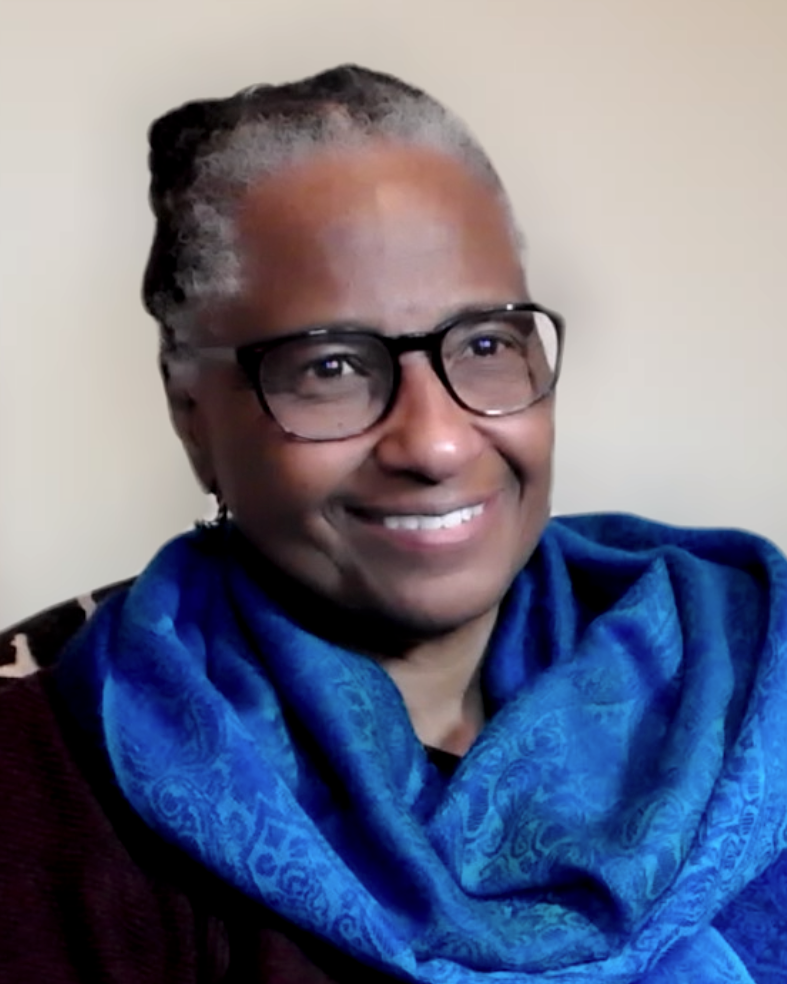
Rev. Dr. Toni Dunbar is an ordained UCC clergyperson, and a founding minister of the City of Refuge United Church of Christ in Oakland, California. She gratefully acknowledges the Rev. Dr. Yvette Flunder, who first publicly introduced the phrase “Third Testament,” and thereby sparked her interest in this area of theological reflection.
© 2026 T.Dunbar
Who’s Your Neighbor?
Rev. Dr. Toni Dunbar, November, 25, 2023
Bridging the Gap: Mental Health First Aid Training Among People of Faith
Post-COVID, and in a world that moves at a relentless pace, mental health has become a critical concern affecting individuals from all walks of life. People of faith, in particular, continually find ourselves navigating in balance between mental health and spiritual well-being. Per the CDC, more than 1 in 5 US adults live with a mental illness; over 1 in 5 youth (ages 13-18) either currently or at some point during their life, have had a seriously debilitating mental illness; about 1 in 25 U.S. adults lives with a serious mental illness, such as schizophrenia, bipolar disorder, or major depression.*i A National Alliance on Mental Illness (NAMI) study showed that 64% of people with mental illness report holidays make their conditions worse.*ii Indeed, a quick perusal of news and a few journals reveals disturbing similarities in the impacts of mental health stigma on airline pilots circa 2016 and 2023.*iii, iv
Historically, however, mental health concerns are met with silence or discomfort in religious settings, often a result of shame, lack of clinical understanding, and/or fear of judgment. Conversely, however, people of faith – who consistently fill native roles in comfort, counsel and caregiving – occupy a unique and powerful niche for promoting a more nuanced understanding of factors contributing to persons’ well-being.
Mental Health First Aid offers a strong supporting platform: “Just as CPR helps one assist an individual having a heart attack, Mental Health First Aid (MHFA) teaches caring individuals how to identify, understand and respond to signs of mental health and substance use-related crises among adults, youth, and special populations.” (https://www.mentalhealthfirstaid.org)
Central tenets of our faith tradition, and of many others, include compassion, empathy, and caring for one another. MHFA can help bridge perceptual gaps between spiritual and mental health, empower individuals to engage in open and compassionate conversations, and foster an environment where seeking help is seen as a strength rather than a weakness.
The training provides practical tools to translate our core values into action. We not only learn to recognize the signs of a mental health crisis but to intervene effectively, offer initial support, connect those in need with appropriate resources, and take care of ourselves in the process. Integrating mental health discussions into our teachings and practices contributes to the normalization of seeking help for mental health challenges; we equip families and communities to address mental health concerns before they escalate.
Mental Health First Aid training also emerges as a crucial tool for churches who create and sustain support networks for our members and surrounds; our partnerships contribute to a broader societal shift towards a more compassionate and inclusive approach to mental health at large.
My MHFA “evangelism” arises from the fact that I am a person with lived experience, who straddles multiple disproportionally impacted populations: person of color, female, LGBTQ+, elder, and so on. I am, in a small way, “a women of sorrows, acquainted with grief.”
Professionally, as a person of faith and pastor, I see at least six domains in which MHFA can directly assist the church: challenging and breaking stigma; aligning our practical work with our spiritual and social values; exploring the interconnectedness of mind, spirit, and body; skilled, do-no-harm crisis intervention and support; promoting a culture of well-being; and strengthening community support networks.
The last domain is, in fact, a form of self-care. Strong, cooperative referral networks of spiritual with therapeutic providers allow us to avoid savior syndrome and observe appropriate boundaries (the Mental Health Center of San Diego shared a pointed but informative article online, “What is a Savior Complex?,” https://mhcsandiego.com/savior-complex/). We can better stave off disillusionment and burn-out while expanding the modes of support available to our families, parishioners and communities. The “warm handoff” can be a win-win. I encourage you to experience this transformative training through a faith lens, and run headlong into the creativity it inspires.
